


School organisation
At Billing Brook School classes are organised into key stages. These include:
Primary: Key Stage 1 and Key stage 2 (Primary 1 and 2)
 In the Primary department our class sizes are small; supported by a teacher and 2 or 3 teaching assistants, who help meet the needs of each pupil. Our small class sizes ensure that all adults know the children very well; their needs, their likes and dislikes and what motivates them. Pupils within Primary are split between Primary 1 (KS1) and Primary 2 (KS2) EHCP outcomes, as well as the Learning for Life curriculum ensure that pupils are supported in all aspects of their academic and personal development
KS1: 1ED, 1JG, 1KO, 1LB, 1NC - Primary 1
KS2: 2KB, 2HP, 2KB, 2ML, 2NB - Primary 2
Secondary: Secondary 1 and 2
Our secondary department is where the provision needs for the pupils and anticipated pathway destinations take greater precedence. The secondary department is made up of Key stage 3 and key stage 4 pupils.
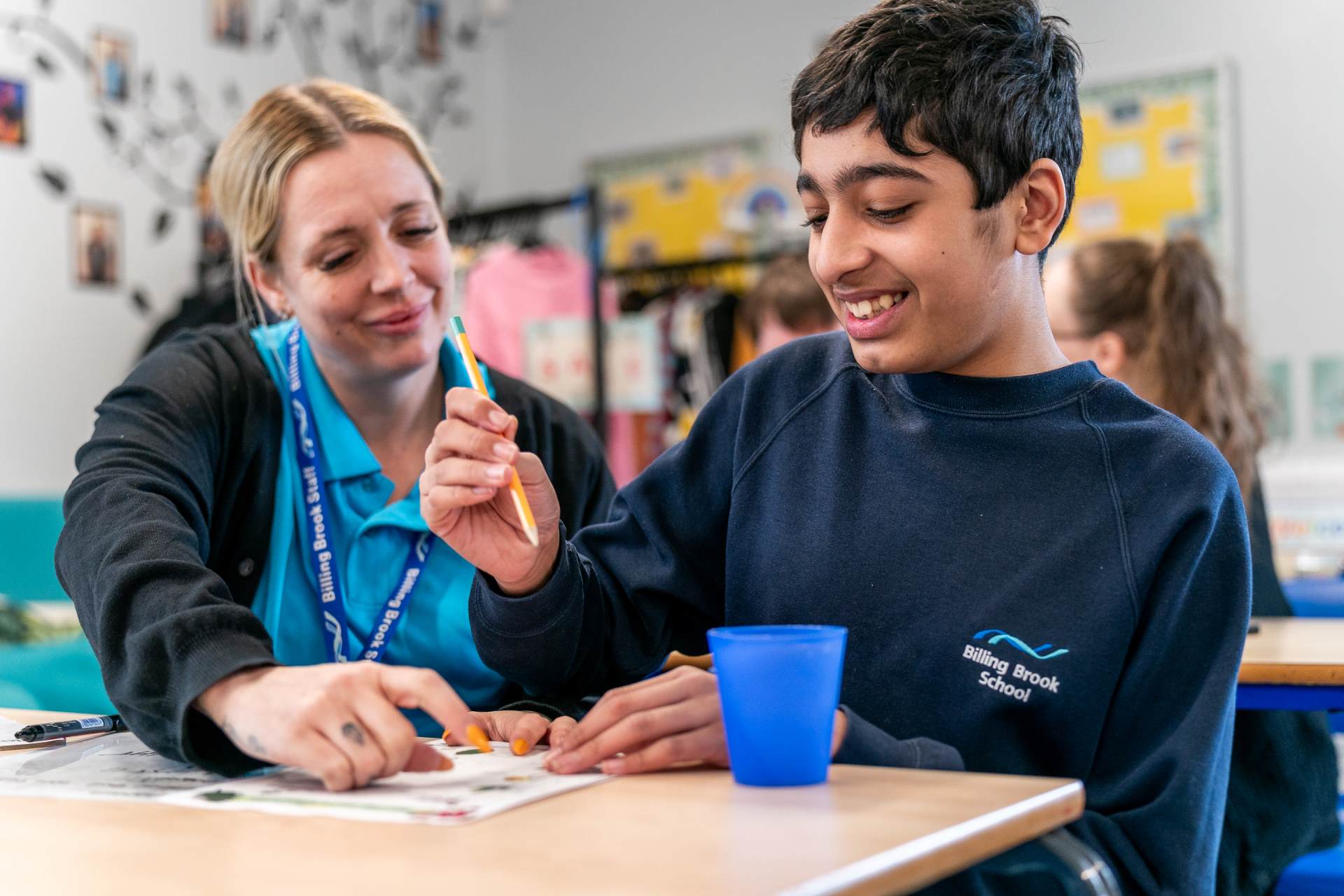
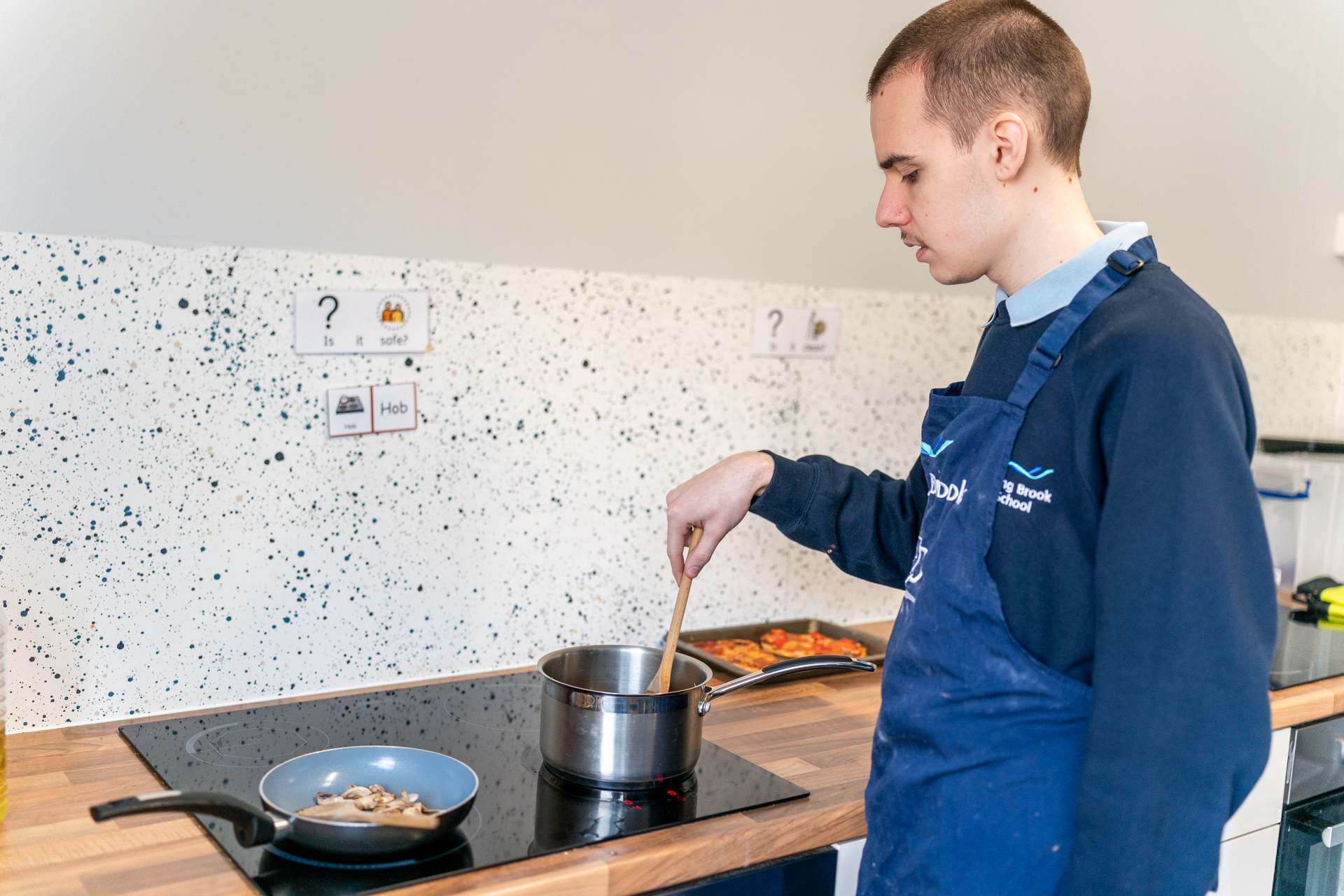
In KS3 (Years 7,8,9) class sizes are approximately 8-12 pupils dependent upon need with one teacher and 2-3 teaching assistants. Students are grouped within their key stage. The class teacher teaches students for the majority of their lessons but where specialist teaching is required they are taught by subject specialists, for example food technology, PE and horticulture. In line with the school ethos of supporting regulation for all pupils, students may access a sensory integration room and other areas of the school to support access to learning, as well as specialist rooms; such as the Art Room, Food Technology room and Sports Barn.
In KS4, (Years 10-11) class sizes are similar to key stage 3, with one teacher and 2-3 teaching assistants. The students will be grouped generally according to their anticipated pathway destinations, as well as taking into account social and emotional needs. The students will access a range of spaces across the school as well as partaking in enrichment activities, enterprise and personal interests options to support them with transitioning into Adult Life. Some pupils in the department have a range of needs that co-exist, overlap and inter-lock. They are young people who have significant cognitive, communication and sensory processing difficulties. Students may also need support with their self-care. As such the provision reflects this. Class sizes are between 6-8 pupils. All classes have a teacher and a number of teaching assistants depending on the needs of the students. Students will remain with their class and teacher throughout the school day.
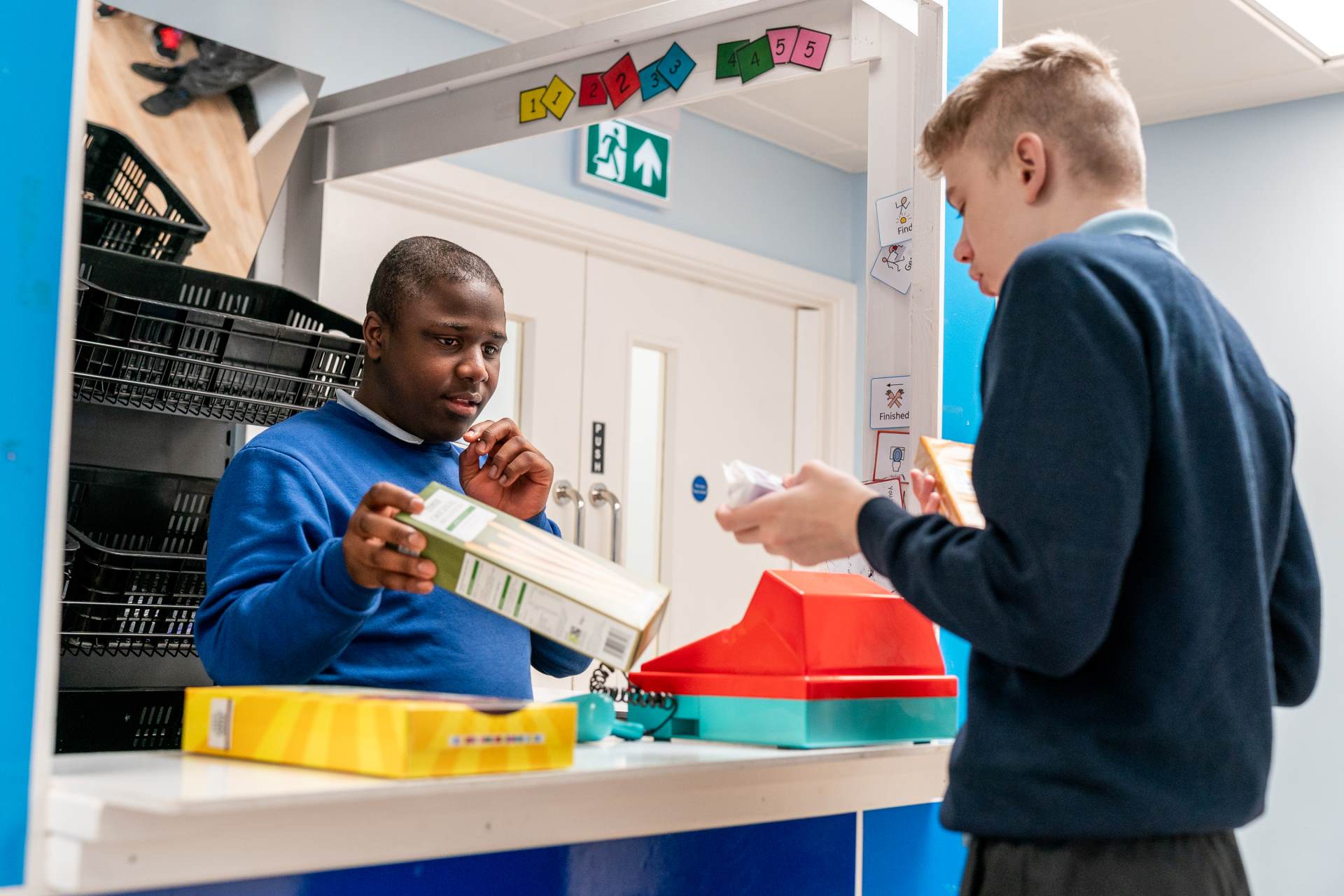
We understand the difficulties that our students may experience, therefore we work hard to create an environment which accommodates their differences. Students may have an individual workstation, which allows for maximum concentration. Workstations also offer support for students who may find the world a distracting or stressful place. Other facilities include, sensory integration room and sensory rooms, life skills area, secure recreational areas and a bistro area in addition to a fully equipped food technology suite.
KS3 - 3TA, 3EK, 3KE, 3EL,3KE,3EL,3JS, 3LBr,3RB

KS4 - 4IB, 4LE, 4LM, 4GW, 4CC, 4SSJ

Post 16:
5KB, 5LW,
5DM, 5 JGr (located in Sixth Form Centre at Holmecross Road)
At Sixth Form there is no uniform. Students are supported by a class teacher who they link with each morning. Many of the lessons may be delivered by other members of staff and students have very personalised timetables depending on their interests and abilities. This means that the class sizes within Sixth form can vary.
Woodland KS5 reflects the provision needs of Woodland KS3-4, and will be primarily class based, with one teacher and a team of teaching assistants.
Each department has a phase leader who is the main point of contact, and directly reports to the Senior Leadership Team